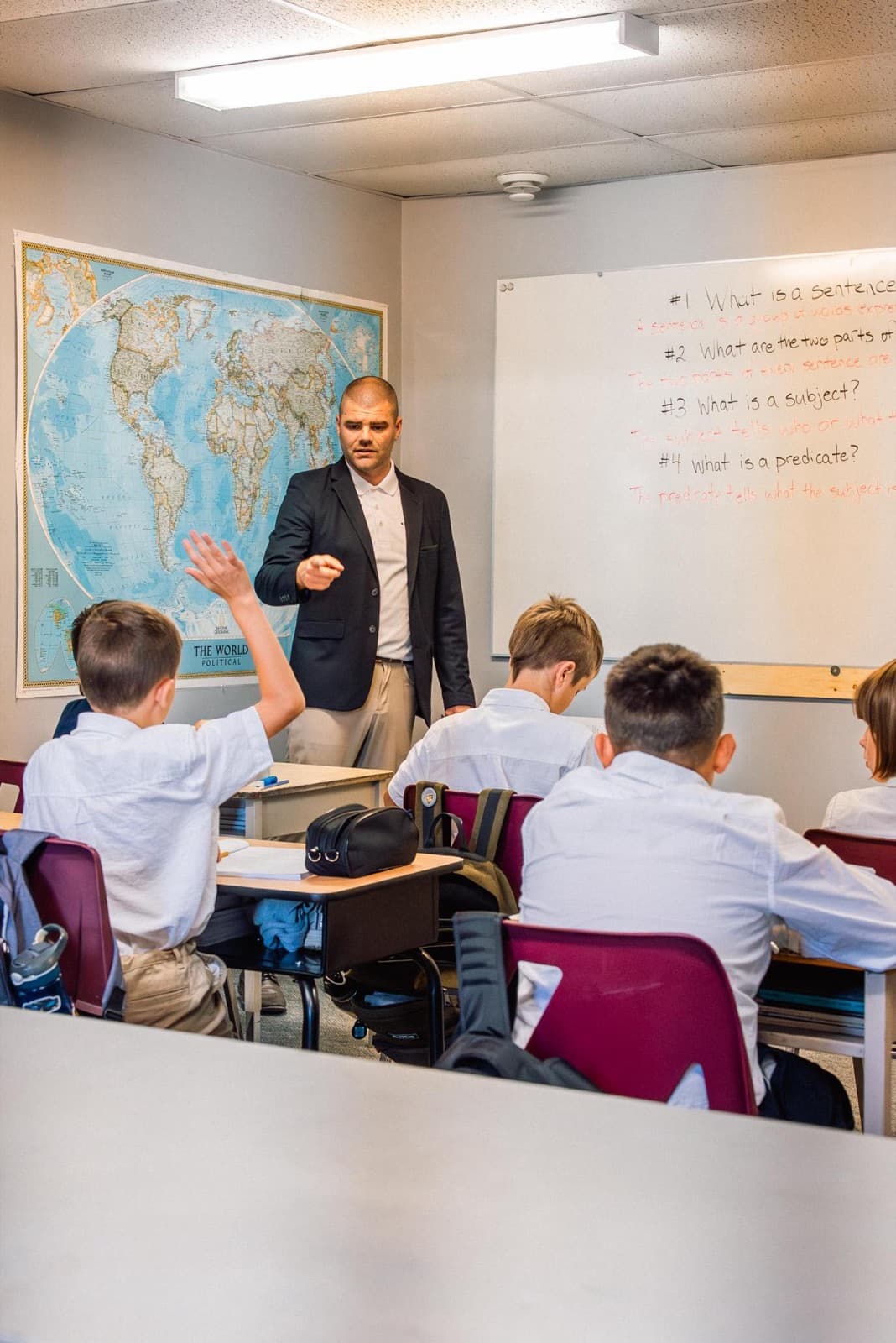
Ask a modern parent (even a parent whose child goes to a classical Christian school) what classical Christian education means and you’ll often get a shrug, or a guess involving togas and dead languages. Fair enough: the word “classical” carries a lot of baggage, and most of us went to a very different kind of school. But this isn’t a novelty. It is, in fact, a very old, time-tested way of raising children who read well, think well, and speak well, and who love God while they’re at it.
A Very Old Idea
Until roughly the mid-1800s, this was education in the West, full stop. Students moved through a sequence of study built around language, logic, and rhetoric, a structure inherited from the ancient Greeks and Romans, adopted and Christianized by the medieval and Reformation church, and passed down through centuries of Western schooling. It produced scientists, statesmen, and poets. More quietly, it produced ordinary people who could read Scripture carefully, reason clearly, and speak the truth well.
That model didn’t vanish because it stopped working. Over the last century and a half, it was replaced, piece by piece, by an education built around vocational efficiency. Useful for some purposes, but a real departure from what came before it. The modern classical Christian school movement is, in large part, a recovery project: reaching back past that shift to retrieve something that worked long before anyone thought to measure it.
The Trivium: Grammar, Logic, Rhetoric
At the center of the classical model is the trivium, Latin for “the three fold way”: Grammar, Logic, and Rhetoric. The first three of the seven liberal arts (more skills than our modern usage of the word “arts”). Recently, these three arts have been helpfully linked to the natural stages of childhood development.
Grammar
The early years
Facts, rhymes, and repetition — the raw material of every subject, learned through singing, chanting, and memory work.
Logic
The middle grades
The age of questioning everything, trained rather than fought: reason carefully, spot a bad argument, build a good one.
Rhetoric
The high school years
Having learned the facts and how to reason about them, students learn to express what they know clearly and winsomely.
We go much deeper into each stage in The Trivium Explained, and the curriculum page has the actual grade-by-grade breakdown. The short version: rather than teaching every age the same way, classical education matches its method to the child in front of it.
Rather than teaching every age the same way, classical education matches its method to the child in front of it.
The Whole Person: Wisdom and Virtue
A classical education that stopped at academics would still be missing the point. The tradition has a word for what it’s after: paideia, the whole shaping of a person, not just the filling of a mind. Alongside grammar, logic, and rhetoric, classical schools have always understood their task as forming character. When we say that we want our students to read, think, and speak well, we do not mean merely with skill, but with humility, courage, and love.
What Makes It “Christian”?
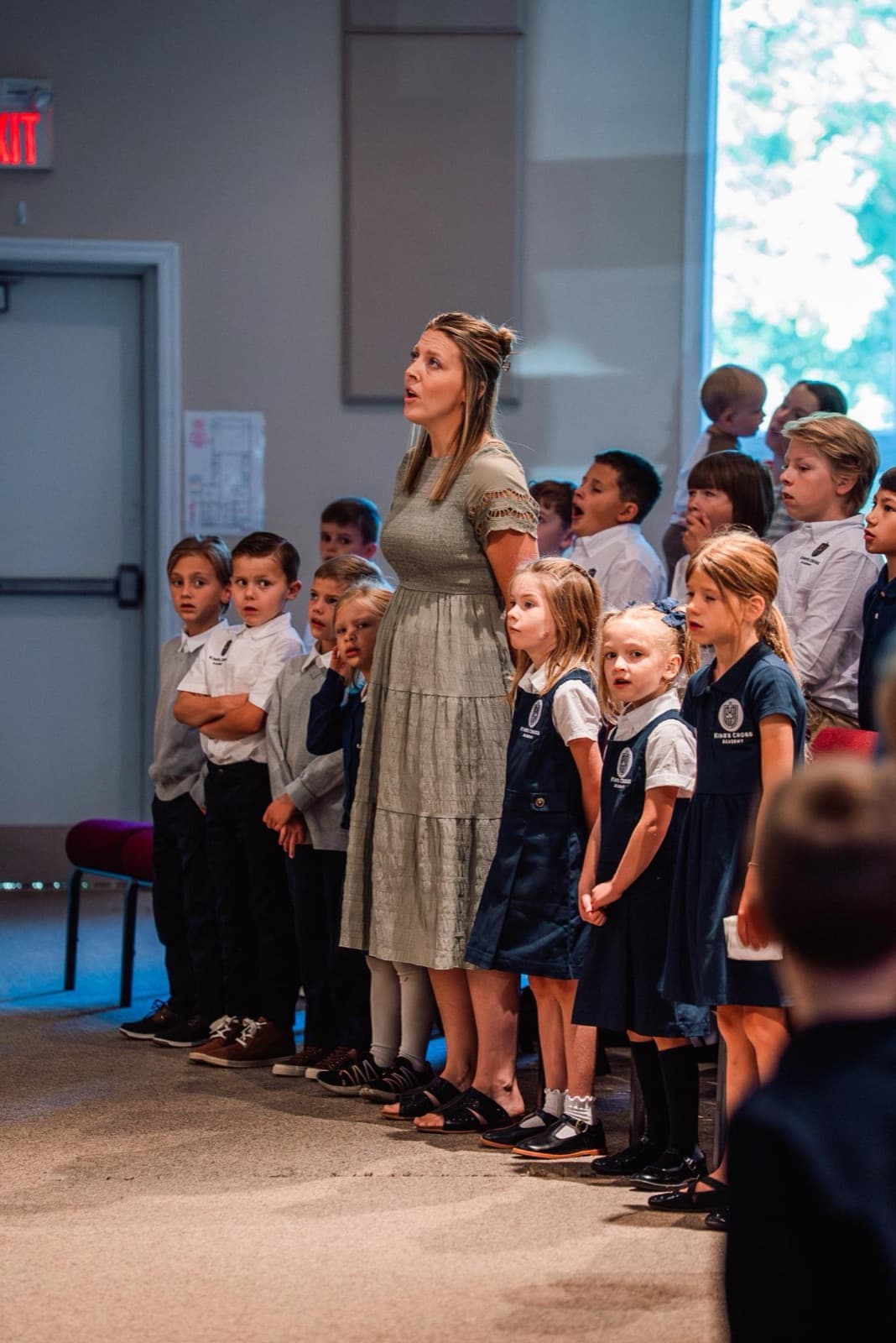
Plenty of respected classical schools are secular humanistic revivals of the old model. What makes a school classical Christian is putting Christ, not just the great books, at the center of the curriculum. Every subject, whether it’s history, science, literature, or math, is taught in light of God’s word, under His Lordship, in service of raising children who know Him and are equipped to love and serve Him with everything they’ve learned.
That’s the short version. If you want to see what it looks like in a real school, with real grade bands and real teachers, The Classical Difference is the next place to look.